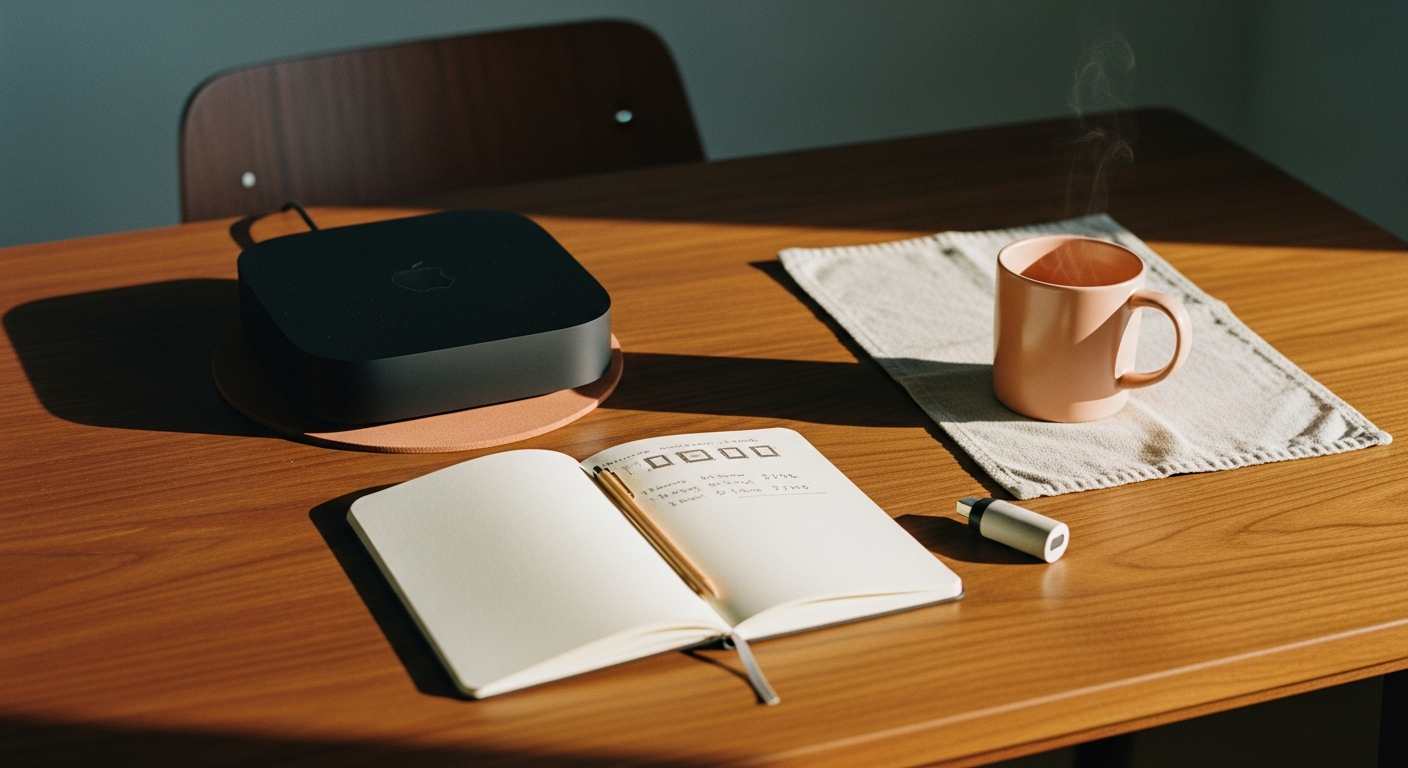
If you've been waiting to pull the trigger on a Mac mini, the math just changed. In May, Apple quietly discontinued the $599 base model and bumped the entry price to $799. The 256GB tier is gone worldwide. Same M4 chip, same 16GB of unified memory — you just pay $200 more and get 512GB of storage you may or may not have wanted.
This isn't an isolated repricing. It's the leading edge of a global memory crunch that's reshaping how every consumer device gets priced, and Mac mini buyers are sitting right in the blast radius.
What actually changed on the Mac mini
The old lineup: $599 for M4 / 16GB / 256GB. The new lineup starts at $799 for M4 / 16GB / 512GB. Apple framed it as "simplifying the lineup," but the practical effect is a 33% jump on the cheapest way into the Mac mini line. The 512GB version was backordered through the second and third weeks of June — supply is real, not just a pricing strategy.
Tim Cook acknowledged on the earnings call that Mac mini and Mac Studio are both supply-constrained, and said it may take "several months" to bring supply and demand back in line. He pointed to "the availability of the advanced nodes our SoCs are produced on" — basically, the same fabs that make the M-series chips are also making memory controllers that everyone else wants.
Why this is happening
The short version: AI data centers are eating the world's DRAM and NAND supply.
Samsung, SK Hynix, and Micron — the three companies that make essentially all the memory in your Mac mini — have been shifting production toward high-bandwidth memory (HBM) for AI servers. Nvidia, Microsoft, Google, and Meta are buying every wafer they can get. The result:
- DRAM prices jumped 90% in Q1 2026. Not over a year. In one quarter.
- NAND flash and DRAM combined are up more than 300% versus pre-shortage baselines, according to TechInsights.
- IDC projects 10–20% consumer electronics price hikes across the board, plus an 11.3% contraction in the PC market by year end.
An Apple spokesperson placed the blame plainly: "the rapid expansion of AI data centers, which has created an extraordinary surge in demand for memory and storage." When Apple's online store came back online after the lineup refresh, Mac prices were up 15–20% across the board and iPad prices jumped 15–25%.
How long this lasts
Don't expect a quick reset. S&P Global Ratings published a report on June 11 forecasting that memory prices will "stay elevated on tight supply stemming from surging AI demand" through at least 2028. Building new memory fabs takes years, and the AI buildout is still accelerating, not slowing down.
TechInsights ran the numbers on Apple's margin exposure and estimated the iPhone 18 Pro alone would need a ~$270 price increase just to maintain current profit margins. Whether Apple eats some of that or passes it all on, the trend line for the next two-plus years points one direction.
What to do if you're shopping a Mac mini right now
A few practical takes:
- Buy the storage and RAM you actually need now. Upgrading Mac mini memory and storage at order time has always been overpriced versus external alternatives, but with internal prices climbing further, the gap between "buy it built-in" and "add a Thunderbolt SSD later" is wider than ever. A solid external NVMe enclosure can carry a 256GB base machine a long way.
- Refurbished is suddenly a much better deal. Apple's refurb store still has older configurations priced against the pre-hike lineup. A refurbished M2 or M4 Mac mini at the old base price beats a new $799 mini for a lot of use cases.
- Don't wait for prices to drop. The S&P outlook says 2028 at the earliest. If you need the machine, get it. The "wait six months" instinct that worked in normal Apple cycles isn't going to pay off this time.
- Watch Best Buy and Amazon for residual old-stock pricing. Retailers occasionally clear old configurations below Apple's new floor. Worth a check before pulling the trigger.
The bigger picture
The Mac mini has always been Apple's "real computer for less than a grand" play. Losing the $599 entry point is more than a number — it changes who the Mac mini is for. At $799 base, it's still a great machine, but the gap to a refurbished MacBook Air or a used M2 mini narrows in ways that matter for budget buyers.
If you're a creator, developer, or homelab person who's been eyeing a Mac mini as a quiet, efficient little workhorse: the value is still there. Just go in clear-eyed about what's driving the price tag, and don't assume it's coming back down soon.
Sources for the figures in this post: 9to5Mac, MacRumors, Fortune, CNBC, and AppleMagazine.